Login
Login
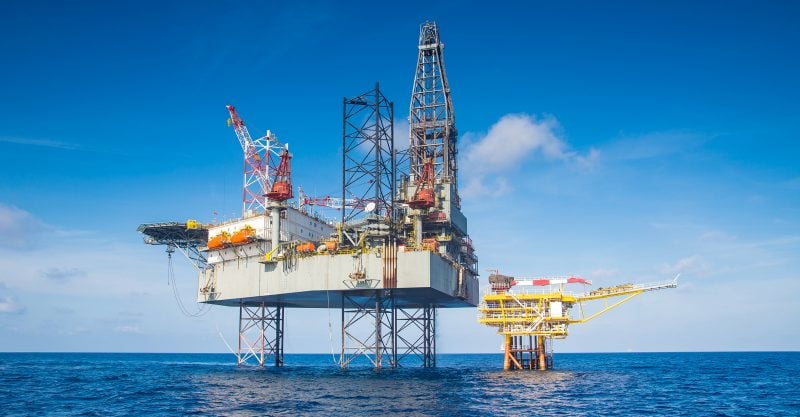


As “extreme” fossil fuel extraction methods such as fracking and acidizing have become increasingly common in offshore oil and gas production over the past decade, the U.S. government is allowing corporations to discharge millions of gallons of hazardous waste into the Gulf of Mexico “without limit.”
That’s according to “Toxic Waters: How Offshore Fracking Pollutes the Gulf of Mexico”, a new report published this month by the Center for Biological Diversity (CBD).
“A decade into the offshore fracking boom, officials still haven’t properly studied its public health impacts,” Miyoko Sakashita, oceans program director at CBD, said in a statement. “The failure to curb this major source of pollution is astounding and unacceptable.”
Scientists and policy experts at CBD compiled the report by analyzing industry documents, peer-reviewed studies, publicly available data, and federal permitting records obtained through the Freedom of Information Act.
CBD explained that fracking “blasts water and chemicals into the seafloor to fracture rock and release oil and gas,” while “acidizing injects hydrofluoric or hydrochloric acid to etch pathways in rock walls and release the fossil fuels.”
Because roughly 98% of all offshore oil and gas production in the U.S. occurs in federal waters off the Gulf Coast of Alabama, Mississippi, Louisiana and Texas, the report characterizes that area as “ground zero for offshore fracking and its threats to wildlife and public health.”
Although an industry report to the U.S. Environmental Protection Agency disclosed that “each frack releases about 21,480 gallons of fracking waste, including biocides, polymers and solvents, into the Gulf of Mexico,” CBD noted, the EPA permits companies to dump “unlimited amounts” of toxic byproducts into the Gulf.


While the risks and harmful effects of some fracking chemicals are well-understood, more than three-quarters of the substances used in fracks “haven’t even been studied for their impacts” on human and environmental health, according to CBD.
As a result, wrote the authors of the report, “the Gulf’s communities and ecosystem experience a heavy pollution burden from concentrated fossil fuel infrastructure and cannot bear additional fracking pollution.”
Key findings of the report include:
- The federal government has approved fracking more than 3,000 times and acidizing at least 700 times since 2010 in the Gulf of Mexico alone, with no meaningful oversight or environmental review.
- With no limits on toxic discharge, oil companies have dumped at least 66.3 million gallons of fracking fluids, containing many substances known to be toxic to both people and wildlife, into the Gulf from 2010 through 2020.
- Chemicals used in offshore fracking and acidizing pose significant health risks to people and wildlife, including reproductive harm, neurotoxicity, cancer and even death.
- Extreme oil and gas extraction worsens the climate crisis.
- The fossil fuel industry hurts tourism and fishing, which create about 2.85 million jobs — more than 10 times the jobs created by the fossil fuel industry in the Gulf of Mexico — and provide more in tax revenue.
- State and federal agencies have failed to adequately monitor and regulate fracking and acidizing.
According to CBD, offshore fracking is “inherently dangerous,” which is why the report argues that “state and federal agencies should prohibit the use of extreme oil and gas techniques and stop issuing permits for offshore fracking and acidizing.”
“They should also immediately stop permitting oil companies to discharge toxic chemicals into the Gulf of Mexico,” the authors wrote.
In addition, the report states, “because fracking and acidizing expand the lifespan of offshore oil and gas development and increase production, allowing these practices is inconsistent with the national interest in addressing the climate crisis.”
Sakashita stressed that “offshore fracking threatens Gulf communities and wildlife far more than our government has acknowledged.”
“To protect life and our climate,” she added, “we should ban these extreme extraction techniques.”
Originally published by Common Dreams.